
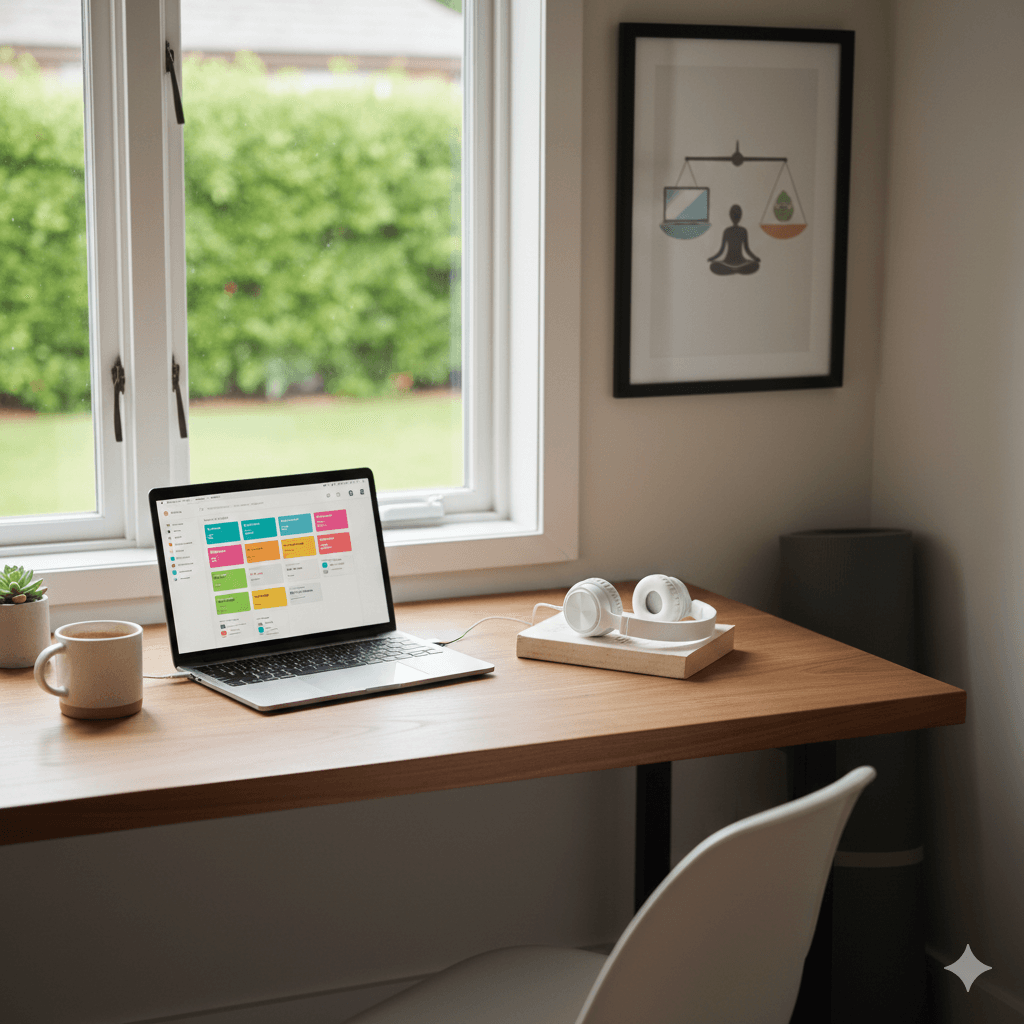
“Finding the perfect work-life balance for remote workers has become the biggest challenge in today’s digital world. At first glance, working from home seems like a dream come true, but when your bedroom becomes your office, the line between professional tasks and personal life starts to blur.
Many professionals often wonder, how can I stay productive without hitting a burnout wall? If you find yourself stuck in ‘always-on’ mode, feeling overwhelmed by endless notifications, you are not alone. In this guide, we will explore proven strategies to help you maintain work-life balance for remote workers while protecting your mental health and productivity.”
“What You Will Learn: Master Work-Life Balance for Remote Workers”
The Rising Challenge of the Digital Workspace
“The Rising Challenge of the Digital Workspace: Before we dive into the secrets, we must understand why work and life balance for remote workers is so difficult to achieve. In a traditional office, the physical act of “going to work” prepares the brain for focus. However, when working from a home office, we lack these environmental cues, making it hard to “switch off” after hours.
According to recent studies, those in remote jobs often work 10-20% more hours than office-based staff. Why? Because the “office” is always accessible, right in your pocket or on your desk. To counter this, you need a strategic approach and better life balance tips to manage your professional life and home environment to protect your personal well-being.”
1. Set up a Dedicated Workspace for Work-Life Balance
One of the biggest mistakes remote workers make is working from their bed or the sofa. While it feels comfortable for the first ten minutes, it sends confusing signals to your brain. To master the perfect work-life balance for remote workers, you must establish a physical boundary between ‘home’ and ‘office’.
Why a Separate Space Matters
Your brain thrives on association. When you sit at a specific desk, your mind enters “focus mode.” When you leave that desk, you signal to your brain that the workday is officially over. This is the secret to staying productive without letting work bleed into your dinner time.
Tips for Setting Up Your Remote Office:
- Choose a Low-Traffic Area: Pick a corner away from the TV or kitchen to minimize distractions.
- Invest in Ergonomics: A supportive chair prevents back pain, which is a leading cause of remote work fatigue.
- Lighting and Air: Position your desk near a window. Natural light boosts mood and energy levels.
2.Creating a Productive Home Routine and Setting Work Hours
In a traditional office, the commute home acts as a mental bridge between your professional and personal life. For remote workers, that bridge is often missing, leading to a blurred line between work and rest. Without a clear end to your day, “five more minutes” quickly turns into two extra hours of answering emails, which is the fastest way to destroy work-life balance for remote workers.
“Developing successful plans for your day helps you stay focused. Every morning, when you sit at your desk, you should feel ready for work without any distractions from the household chores.”
How to Create Your Log-Off Ritual
A dedicated shutdown routine tells your brain, “We are done for the day.” This mental shift reduces clutter and is the most effective strategy to protect your work-life balance for remote workers. If you don’t disconnect properly, you risk long-term exhaustion and decreased productivity.
- The To-Do List Review: Spend 10 minutes writing down what you achieved today and what needs to be prioritized tomorrow. This “brain dump” prevents work-related stress from following you into your evening.
- The Digital Cleanse: Close all unnecessary browser tabs. Shut down your laptop—don’t just put it on “sleep” mode. Physically closing the device is a powerful psychological signal that your shift is over.
- The “Fake Commute”: Since you don’t have a drive home, take a 10-minute walk outside. This physical movement acts as a transition, helping you shift your mindset from “Employee” to “Family Member” or “Individual.”
- Mastering Digital Boundaries: Set your Slack or Microsoft Teams status to “Away” exactly at your log-off time. Maintaining work-life balance for remote workers requires you to be firm with your availability.
By consistently practicing these rituals, you ensure that your home remains a place of relaxation, not just a 24/7 office.
3. Recognizing Remote Work Burnout and How to Prevent It
“To effectively prevent burnout, you must prioritize effective communication with your teammates and colleagues. Often, remote workers feel overwhelmed because they lack a clear work environment where they can discuss their workload. If you are part of a remote company, my best advice is to be transparent about your slack availability.
Instead of staying glued to your couch all day, set clear work time boundaries. Proper communication ensures that your coworkers understand when you are ‘on’ and when you are taking much-needed breaks from work to protect your personal life. Remember, your productivity depends on how well you manage these digital interactions.”
Warning Signs of Burnout
- Constant Fatigue: Feeling drained even after 8 hours of sleep or a weekend off.
- Irritability: Small Slack or email notifications start feeling like a personal attack or a major burden.
- Lack of Motivation: Struggling to start your first task of the day and feeling a “brain fog” that won’t go away.
- Physical Symptoms: Regular headaches, back pain from poor posture, and eye strain are all physical signs that your body needs a break.
Advanced Prevention Strategies
To protect your work-life balance for remote workers, you need more than just a break; you need a system:
- The 20-20-20 Rule: To prevent digital eye strain, every 20 minutes, look at something 20 feet away for at least 20 seconds. This simple habit protects your vision and gives your brain a micro-break.
- Prioritize Social Interaction: Remote work can be incredibly lonely. Use your lunch break to call a friend, work from a local, ‘Cafe’ or join a co-working space once a week. Human connection is the best antidote to work-from-home isolation.
- Scheduled “Me Time”: Block at least 30 minutes in your digital calendar for a nonwork activity, like reading a book or light stretching. This makes your personal time non-negotiable.
- The “Power Nap” Strategy: If you feel your productivity dropping, a 15-minute power nap can recharge your brain better than a third cup of coffee.
- “To truly protect your professional life from the silent trap of exhaustion, you must realize that burnout is often a result of poor work and life boundaries. Unlike traditional office jobs, where the structure is forced upon you, remote work requires you to create your own plans. By exploring different options for your daily routine and using the flexibility of your home office, you can find better ways to stay energized. Being ready for work is not just about opening your laptop; it is about ensuring your mental health is prioritized through smart life balance tips. Adding these extra layers of protection to your work schedule is the only way to sustain long-term success in the digital era.”
4. Prioritize Deep Work Over Busy Work
Don’t confuse being busy with being productive. Many professionals spend hours on “shallow work”—like constantly checking emails or attending unnecessary meetings—which ultimately ruins the work-life balance for remote workers. When you spend your day on low-impact tasks, you end up working late into the night to finish your actual projects, leading to remote work fatigue.
To master work-life balance for remote workers, you must learn to prioritize “Deep Work.” This means dedicating 2-3 hours of uninterrupted time to your most important tasks.
The Pomodoro Technique for Remote Success
Using a timer is one of the best time management hacks to stay on track.
- The Process: Work for 25 minutes with total focus, followed by a 5-minute break. After four cycles, take a longer 30-minute break.
- The Benefit: This technique ensures you finish your high-impact tasks early, allowing you to log off on time and maintain a healthy work-life balance for remote workers.
- Avoid Burnout: These frequent breaks prevent your brain from hitting a wall, keeping your productivity high throughout the work schedule.
Applying the Eisenhower Matrix
As shown in the diagram above, you should categorize your tasks into four quadrants:
- Urgent & Important: Do these first to protect your work-life balance.
- Important but Not Urgent: Schedule these for your “Deep Work” blocks.
- Urgent but Not Important: Delegate these if possible.
- Neither: Delete these distractions to save your mental health.
By focusing on what truly matters, you ensure that your work-life balance for remote workers remains intact ‘and’ you don’t feel overwhelmed by an endless to-do list.
“To truly master deep work, you must also address the digital noise that disrupts your professional life. In most remote jobs, we feel the urge to respond to every ping immediately. However, one of the best ways to maintain your work and life balance is to embrace flexibility in your response time. By setting specific ‘Communication Windows,’ you ensure that your brain remains ready for work on high-priority tasks rather than getting lost in endless Slack threads. This is one of the most underrated life balance tips that separates successful remote professionals from those who hit the burnout wall.”
5. The Psychology of Dressing for Success
While working in pajamas sounds fun and is often seen as a perk of the job, it can actually hinder the work-life balance for remote workers. When you stay in your sleepwear all day, your brain remains in “sleep mode” or “relaxation mode.” This mental state makes it incredibly difficult to focus on high-priority tasks and maintain high productivity levels.
Changing into casual work clothes signals a powerful shift in your mindset. To master a healthy work-life balance for remote workers, you must use every psychological tool at your disposal, including your wardrobe.
Why “Getting Ready” Matters for Remote Professionals
- The unclothed Cognition Effect: Science shows that the clothes we wear affect our mental processes. Dressing professionally boosts your confidence and helps you maintain a strict work schedule.
- Physical Boundaries: Just like a dedicated desk, “work clothes” act as a physical boundary. It makes it much easier to “switch off” and transition back into your personal life when you change back into loungewear or pajamas at the end of the day.
- Video Call Readiness: Being dressed professionally reduces the stress of sudden meetings, helping you avoid remote work fatigue caused by constant anxiety about your appearance.
How to Implement This for Better Balance
You don’t need to wear a suit, but shifting from pajamas to “business casual” is a game-changer for work-life balance for remote workers.
- Morning Routine: Treat your morning as if you are going to a real office. Shower, dress up, and then start your laptop.
- The Evening Reset: As soon as your work schedule ends, change your clothes immediately. This physical act tells your brain that the workday is officially over and it’s time to enjoy your personal life.”Beyond just dressing up, your physical well-being plays a massive role in your mental transition. Unlike traditional office jobs, where you move between meeting rooms, at a home office, you might stay stationary for hours. To improve your professional life, you must integrate ‘Movement Breaks’ into your work schedule. Whether it is a quick stretch or choosing healthy snack options, these small physical acts reinforce your flexibility. When your body feels active, your mind stays ready for work, making it much easier to transition back into your personal life once the sun goes down.”
- Why Flexibility is the Future of Office Jobs“Many people transitioning from traditional office jobs to remote roles often struggle to manage their professional life. However, the real secret lies in embracing flexibility. By having multiple options for your work hours and using the right ways to stay organized, you can ensure that you remain ready for work without sacrificing your mental peace. This is the ultimate goal for anyone looking to master work and life balance.”
Conclusion: Your Balance, Your Rules
Achieving a perfect work-life balance for remote workers isn’t about following a strict set of rules; it’s about finding a rhythm that works for you. Whether it’s setting up a dedicated corner or committing to a “log-off” ritual, the goal is to ensure work supports your life, not consumes it.
Start small. Pick one tip from this guide today. You’ll be surprised at how much of a difference a small change can make to your growth vibe.
“Ultimately, mastering your professional life in a home office setting requires you to stay consistent with these plans. By utilizing the flexibility of remote jobs, you can finally achieve the perfect work and life balance you deserve.”